
Throwback: How Semi-Trailers Have Changed Over the Decades
From Simple Freight Haulers to Today's Safer, Smarter & More Efficient Trailers
If you’ve been around the trucking industry for a while, you’ve probably noticed just how much trailers have changed. Today’s semi-trailers are lighter, stronger, safer, more fuel-efficient, and more technologically advanced than the equipment that first helped build America’s trucking industry.
But where did it all begin?
The history of the semi-trailer is a story of innovation driven by necessity. As freight transportation grew, so did the need for equipment that could haul more, travel farther, protect cargo better, and keep drivers and businesses moving.
Let’s take a trip down memory lane and see how far trailers have come and why the changes have been for the better.
The 1910s - 1940s: The Early Days
The semi-trailer concept dates back to 1914, when Detroit blacksmith August Fruehauf built a trailer to help transport a boat behind a Ford Model T. The idea proved useful, and trailers soon became an important way to transport lumber and other freight. Fruehauf Trailer Company was established in 1918, and its fifth-wheel semi-trailers helped establish the basic configuration of the freight trailers we recognize today
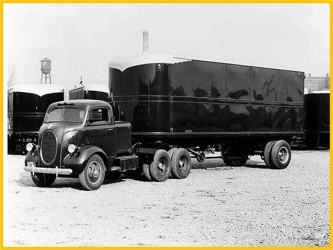
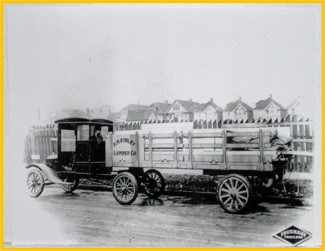
Early trailers were built primarily for strength and simplicity. They were considerably different from today’s aerodynamic dry vans and reefers.
Many early trailers featured:
- Heavy-duty steel construction
- Basic suspension systems
- Simple braking systems
- Basic lighting
- Limited cargo protection
- Minimal aerodynamic consideration
- Heavy wheels and tires
They weren’t necessarily comfortable or efficient, but they were built to work. And they laid the foundation for an industry that would eventually move virtually everything we depend on.
The 1950s - 1960s: The Highway Era
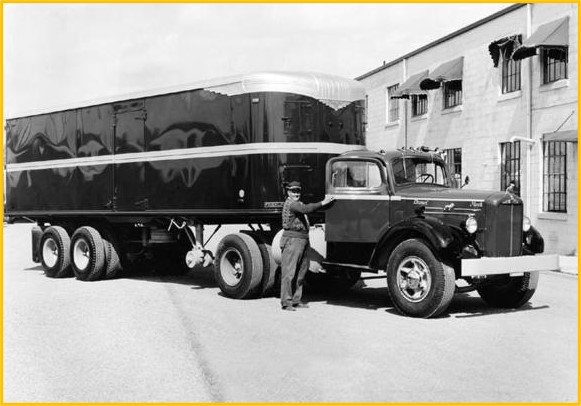
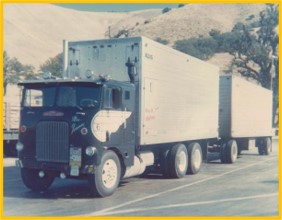
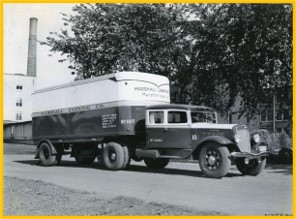
As America’s highway system expanded, trucking became increasingly important for moving freight across longer distances. Trailers evolved along with the trucks pulling them.
Manufacturers began improving:
✔ Trailer construction
Stronger materials allowed trailers to handle heavier workloads.
✔ Suspension
Improved suspension helped protect both the trailer and the cargo.
✔ Braking
Trailer braking systems continued to advance as trucks became larger and traveled farther.
✔ Cargo capacity
Businesses were able to move more freight with fewer trips.
This period helped transform the trailer from a relatively basic hauling device into a critical component of America’s growing logistics network.
The 1970s - 1980s: The Dry Van Becomes a Workhorse
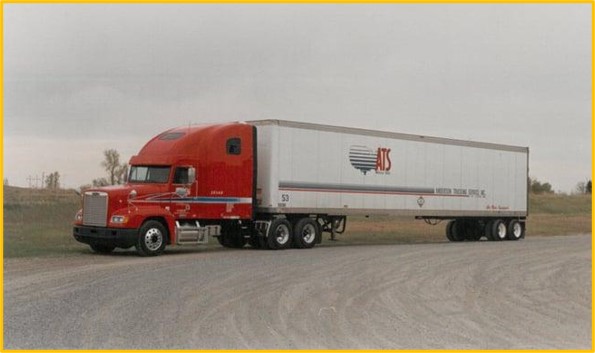
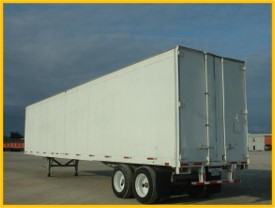
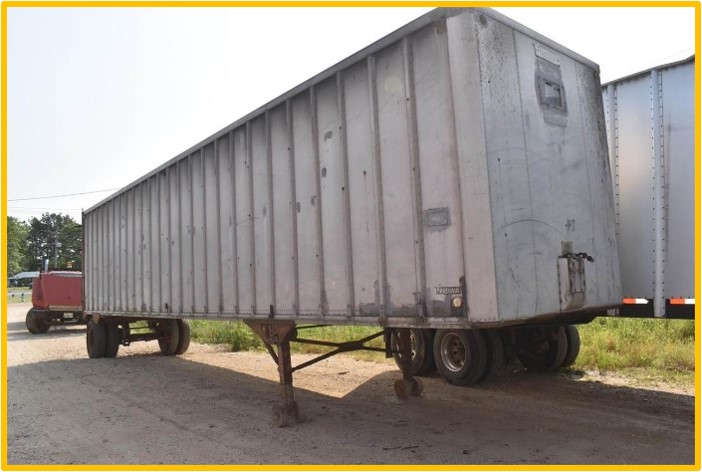
By the 1970s, the enclosed dry-van trailer had become one of the most recognizable and useful pieces of equipment in trucking.
A 1970 Fruehauf dry van, for example, featured a 40-foot body, wood deck, spring suspension, air brakes, tandem axles and dual landing gear.
Compare that with today’s 53-foot dry vans, and the difference becomes obvious.
Trailer manufacturers were increasingly focused on:
- Maximizing usable cargo space
- Reducing unnecessary weight
- Improving durability
- Making loading and unloading easier
- Improving braking and suspension
- Protecting cargo from weather
The basic box trailer was becoming the workhorse of American freight transportation.
The 1980s - 2000s: The Rise of Specialized Trailers
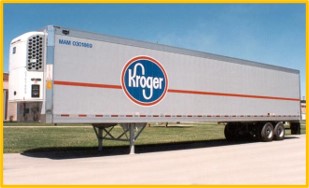
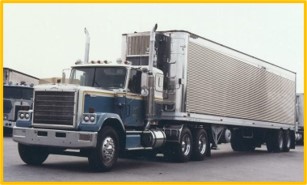
Not every load can ride in a standard dry van.
Food, pharmaceuticals, produce and other temperature-sensitive products created the need for increasingly sophisticated, refrigerated trailers, better known as reefers.
The industry began making major improvements in:
- Insulation
- Refrigeration systems
- Temperature control
- Interior design
- Door sealing
- Temperature monitoring
Interestingly, refrigerated transportation isn’t a new concept. August Fruehauf is credited with constructing an early refrigerated semi-trailer as the industry developed.
Today’s reefers are dramatically more precise. Modern refrigeration systems can maintain specific temperatures and provide information that helps operators protect sensitive cargo throughout its journey.
That’s a huge improvement when your load is worth thousands or even millions of dollars.
The 2000s - 2010s: Lighter, Safer & More Efficient
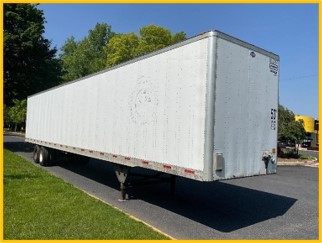
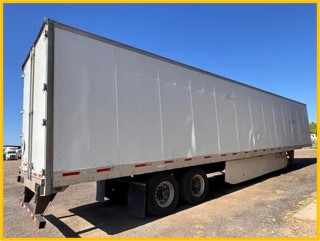
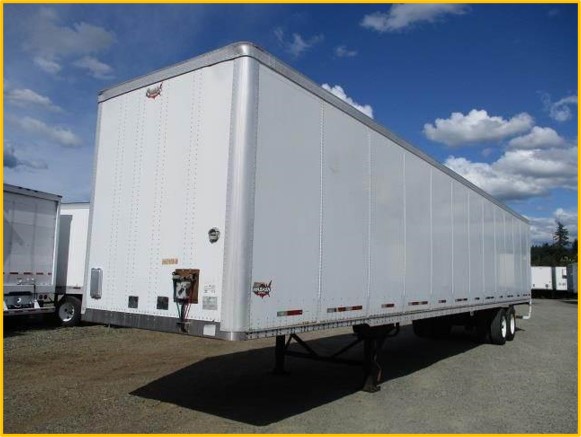
This era brought some of the biggest changes to trailer design.
Manufacturers began focusing heavily on weight reduction, safety, aerodynamics and operating costs.
For example, trailers from this era began incorporating LED lighting, reflective safety markings, improved suspension systems, and stronger yet lighter construction. These advancements helped improve visibility, safety, fuel efficiency, and overall trailer performance.
Why does lighter matter?
A lighter trailer can potentially allow a carrier to haul more revenue-producing freight while staying within weight limits. That’s important because every pound matters in transportation.
Manufacturers also began paying more attention to aerodynamics.
Various features help reduce wind resistance and improve fuel economy such as:
- Side skirts
- Improved trailer shapes
- Aerodynamic fairings
- Better tractor-to-trailer integration
- Low-profile components
Safety Has Come a Long Way
One of the most important improvements isn’t something you can necessarily see from the outside.
Trailer safety technology has advanced tremendously.
Modern trailers can include:
- Anti-lock braking systems (ABS)
- LED lighting
- Improved reflective tape
- Automatic slack adjusters
- Air-ride suspension
- Tire-pressure monitoring
- Improved braking components
- Stronger landing gear
- Better cargo securement systems
These advancements don’t just make equipment better, they can help protect drivers, other motorists and the cargo being transported.
The 2020s: Trailers Are Getting Smarter

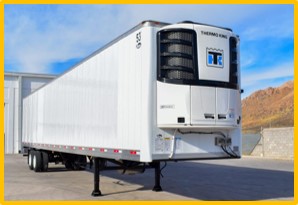
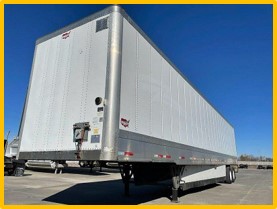
Today’s trailers look cleaner and more refined, but some of their biggest improvements are happening behind the scenes.
Modern trailers can be equipped with technology that provides information about:
📍 Location
Where is the trailer?
🌡️ Temperature
Is the reefer maintaining the proper temperature?
🚪 Doors
When was the trailer opened?
🛞 Tires
Are tire pressures within the proper range?
🔧 Maintenance
Does the equipment need attention?
This technology gives fleet managers information they didn’t have decades ago, and it’s at their fingertips.
Instead of simply waiting for something to break, businesses can use data to identify potential problems and schedule maintenance proactively.
That means less downtime and more time on the road.
Better for Business and Better for the Future
The evolution of trailers isn’t just about adding technology. It’s also about making equipment more efficient and sustainable.
Today’s manufacturers continue to look for ways to:
- Reduce trailer weight
- Improve fuel economy
- Extending component life
- Reduce maintenance
- Improve refrigeration efficiency
- Use longer-lasting materials
- Reduce aerodynamic drag
- Increase overall trailer utilization
These improvements may seem small on their own, but over thousands of miles and years of use, they can make a significant difference.
- A lighter, more aerodynamic trailer can help reduce fuel consumption.
- More durable components can mean fewer repairs and less downtime.
- Better refrigeration technology can help protect valuable loads while using energy more efficiently.
The result? Equipment that works harder, lasts longer, and costs less to operate.
When you look at how far trailer technology has come, the transformation is incredible.
Early trailers required drivers and fleet operators to rely heavily on manual inspections and hands-on monitoring. Today, trailers can provide valuable information about their location, tires, temperature, doors, maintenance needs, and overall performance.
What was once simply a piece of equipment used to haul freight has become an important part of a connected and highly efficient transportation system.
What's Next for Semi-Trailers?
If history tells us anything, trailer technology isn’t finished evolving.
The trailers of tomorrow will likely continue becoming:
✔ More connected
✔ More fuel efficient
✔ More lightweight
✔ More durable
✔ More technologically advanced
✔ More environmentally friendly
We may eventually see even greater use of electric refrigeration systems, advanced telematics, predictive maintenance and other technologies designed to reduce operating costs and improve uptime.
And while technology continues to change, the purpose remains the same:
Get the freight there safely, efficiently and reliably.
The Bottom Line
Looking back at the history of the semi-trailer makes one thing clear:
Trailers continue to evolve.
They’re safer for drivers.
They’re better for cargo.
They’re more efficient for businesses.
They’re easier to monitor.
They’re built to last.
And they’re designed to keep freight moving.
From the early trailers of the 1900s to today’s high-tech dry vans, reefers and specialty trailers, every generation has built upon the one before it.
At Desert Trailer Systems, we’re proud to be part of an industry that continues to grow and innovate.
Whether you’re looking for a dry van, refrigerated trailer or specialty trailer to rent or to purchase, our team is here to help you find the right equipment for the job.
DTS is here to help keep Arizona and the transportation industry moving.
Come experience the DTS Difference for yourself!
Call us today: (602) 272-8910
Browse inventory: www.deserttrailer.com
Desert Trailer Systems: Driven by Excellence, Powered by You!
